Skip to content
1See where you stand
AI BeaconYour brand across 7 AI engines and Google AI Rank TrackerGoogle and Bing positions, by country Keyword Explorer87M+ keywords with volume and intent BacklinksEvery linking domain, scored from 0 to 100
2Fix what holds you back
Technical SuiteCrawl your site and find what's broken AutoFixPart of Technical Suite. Fixes applied on your live site. Content StudioContent in your brand voice, ready to publish
3Measure the uplift
Web AnalyticsVisits from search and AI, in one view Reports & DashboardsCustom dashboards and scheduled reports
On top of every engine
Ask SEORCEBetaYour AI agent. Ask about your project in the app or on WhatsApp.
Free to use
Browser extension Free tools API reference
Every engine reads the same project data.See the full platform →
By team
EnterpriseMany sites and markets, one method Global brandsYour brand in search and AI answers AgenciesA project for each client, priced per project ConsultantsRun client work from one account E-commerceProduct and category pages buyers can find D2C brandsVisibility for brands that sell direct B2B & SaaSBe there while buyers research
By industry
Automotive Baby & kids Beauty Consumer electronics Education Energy & utilities Fashion Financial services FMCG Food & beverage Health & wellness Healthcare Home & furniture Insurance IT services Legal Logistics Luxury Manufacturing Marketplaces Media & publishing Multi-location brands Pharma Professional services Real estate Sports & entertainment Telecom Travel & hospitality
A project for each site or market.See all solutions →
Learn
BlogGuides and notes from our team FeedAI and SEO news, as it moves The GEO guideGenerative engine optimisation, start to finish
Get the job done
Use casesHow to get a job done, topic by topic PlaybooksWhat to do when things change
AI visibility tracking Automated technical SEO Recover from a traffic drop Prove SEO ROI to leadership
Free resources
Free toolsSchema and content brief generators, and more Browser extensionFor Chrome, Edge and Firefox. Audits the page you're on, free.
Help and updates
Docs API API reference Changelog
Enterprise
Pricing
Log in Book a demo Start free
Platform
See where you stand
AI Beacon Rank Tracker Keyword Explorer Backlinks
Fix what holds you back
Technical Suite AutoFix (in Technical Suite) Content Studio
Measure the uplift
Web Analytics Reports & Dashboards
On top of every engine
Ask SEORCE (beta)
Free to use
Browser extension Free tools See the full platform →
Solutions
By team
Enterprise Global brands Agencies Consultants E-commerce D2C brands B2B & SaaS
By industry
Automotive Baby & kids Beauty Consumer electronics Education Energy & utilities Fashion Financial services FMCG Food & beverage Health & wellness Healthcare Home & furniture Insurance IT services Legal Logistics Luxury Manufacturing Marketplaces Media & publishing Multi-location brands Pharma Professional services Real estate Sports & entertainment Telecom Travel & hospitality See all solutions →
Resources
Learn
Blog Feed: AI and SEO news The GEO guide
Get the job done
Use cases Playbooks AI visibility tracking Automated technical SEO Recover from a traffic drop Prove SEO ROI to leadership
Free resources
Free tools Browser extension
Help and updates
Docs API API reference Changelog
Company
About us Careers Contact Partners Alternatives Comparisons SEORCEBot, our crawler Legal
Enterprise Pricing
Book a demo Start free Have an account? Log in
Theme
SEORCE. The source. An AI-native SEO and GEO platform for mid-market and enterprise brands, and the agencies that serve them.
#1 on Product Hunt
NVIDIA Inception member
Platform
  • AI Beacon
  • Keyword Explorer
  • Content Studio
  • Technical Suite
  • Backlinks
  • Rank Tracker
  • Web Analytics
  • Reports & Dashboards
  • Ask SEORCE · beta
Solutions
  • For B2B & SaaS
  • For e-commerce & D2C
  • For agencies
  • For global brands
  • For enterprise
  • All industries
Learn
  • Use cases
  • Playbooks
  • Blog
  • Feed
  • Browser extension
  • Free tools
  • Docs
  • API
  • API reference
  • Changelog
Company
  • Pricing
  • Alternatives
  • Comparisons
  • Partners
  • About us
  • Careers
  • Contact
  • SEORCEBot
  • Book a demo
  • Legal
© 2026 SEORCE, Inc. · Delaware, US · All rights reserved
Privacy Terms Cookies Billing & refunds

Cookies on seorce.com

We use cookies the site needs to work. With your permission we would also like to use analytics cookies to see how the site is used, and marketing cookies to measure our ads. You can change your choice at any time from Cookie preferences at the foot of every page. Read the cookie policy.

Your browser is sending a Global Privacy Control signal, so marketing cookies stay off.

Strictly necessaryRemember your theme and this choice. Always on.
On
Published Sep 28, 2026•by SEORCE Editorial, Search and marketing desk

Meta Muse AI agent updates add email, Mac use and connectors

Announced at Connect 2026 on September 23, the rollout also includes video calls, glasses support and a pocket device.

Add as a preferred source on Google

TL;DR

  • Meta announced Muse email, Mac control, video calls, connectors, smart glasses support and Muse Charm around Connect 2026 on September 23.
  • Muse will connect to retailers, payment providers and work tools, so product and task data outside Google may affect discovery.
  • Meta has not disclosed enough about Muse Charm shipping, ranking, citations, analytics attribution or connector selection rules.
  • Developers can test Meta VR Glasses with v207 SDKs now, but the glasses are not due to ship until spring 2027.
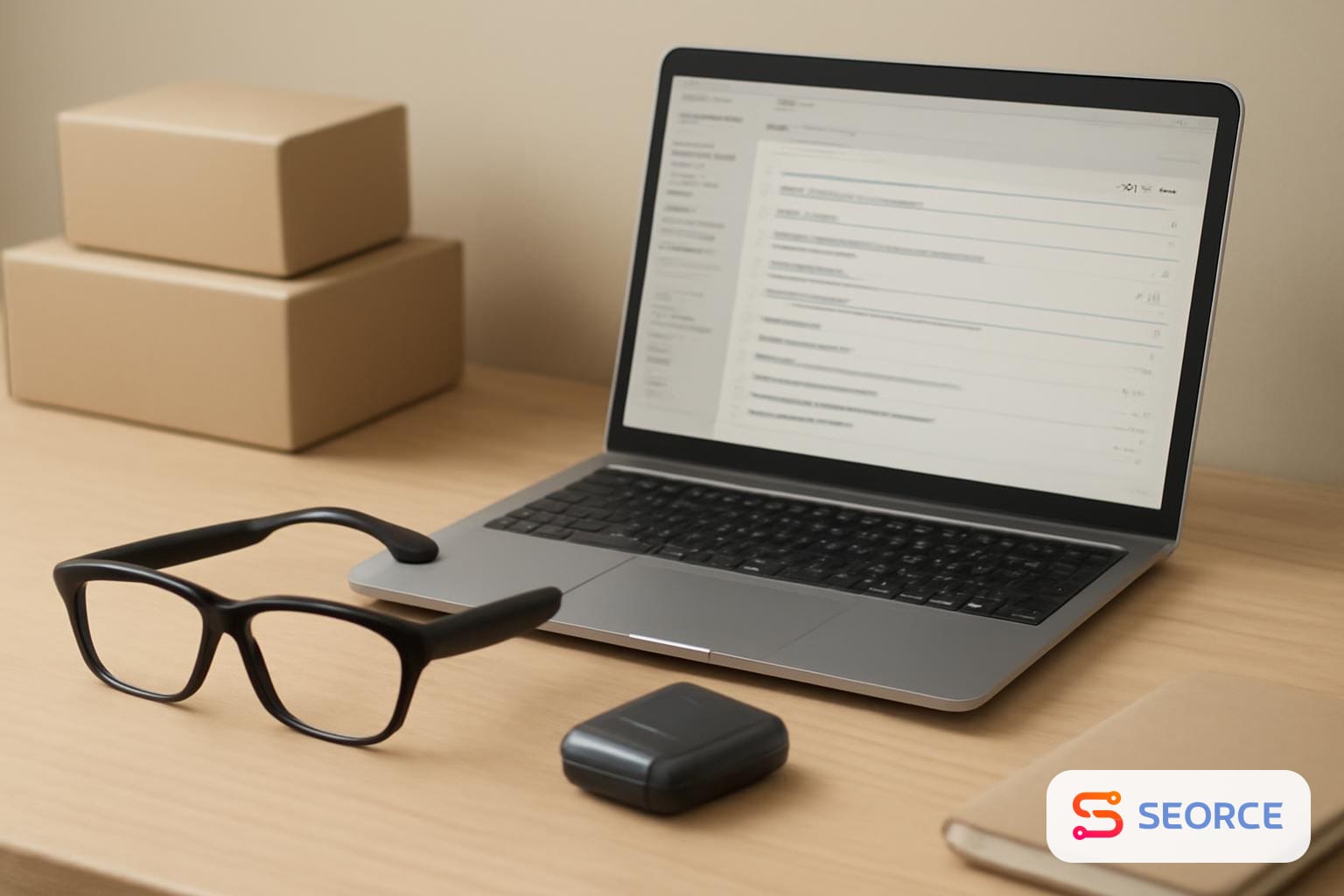
Laptop beside smart glasses and a pocket device on a desk with retail boxes

Meta Muse AI agent updates announced at Connect 2026 on September 23 add email addresses, Mac computer use, video calls, retail and work connectors, smart glasses support in coming months and a pocket device called Muse Charm.

Meta made the announcements through Meta Newsroom and Meta Horizon OS Developers posts published on September 24, after the September 23 Connect 2026 event. The Verge and Social Media Today also reported the changes from Connect, while practitioners and investors on r/stocks reacted on September 28 to a CNBC-linked post about Meta hiring MongoDB CEO CJ Desai to lead its enterprise platform push.

What Meta Muse AI agent updates include

The updates turn Muse from a chat product into a task agent that Meta wants to place in apps, email, computers, glasses, developer tools and a dedicated device. Meta Newsroom says Muse will come to AI glasses in the coming months, and The Verge reported that Muse agents are getting their own email addresses, video calls and Mac computer use.

UpdateWhat the evidence saysSource
Muse email addressesUsers will be able to communicate with a Muse agent through its own email address, and the agent can use that address to accomplish tasks.The Verge
Mac computer useThe Muse Mac app is set to gain the ability to use a computer.The Verge
Video callsMeta plans live video conversations with a Muse avatar, with voice customization and a Muse Realtime Avatar model.The Verge
ConnectorsMeta named connectors including Walmart, Best Buy, American Eagle Outfitters, DICK'S Sporting Goods, Fanatics, Gap, Michael Kors, Sephora, Ulta, Wayfair, Shop Pay, PayPal, Expedia, Instacart, Notion, Granola, GitHub and Box.Meta Newsroom
AI glassesMuse will come to Meta AI glasses in the coming months and act on what a user is looking at.Meta Newsroom
Muse CharmMeta describes Muse Charm as a pocket-sized device for talking and interacting with Muse, with a real-time voice model.Meta Newsroom

Muse is moving from a prompt box to an action surface. The disclosed pieces are an email identity, computer control, partner connectors, camera context through glasses and a pocket device. That combination matters because the agent can receive intent, inspect context, call a partner or tool and complete a task without a normal search session.

How Muse actions are supposed to work

Muse works by combining a user instruction with context from an interface and then routing the task through a supported surface or connector. Meta Newsroom says glasses users will be able to say the agent's name and have Muse act on what they are looking at, while The Verge says email addresses and Mac control add two more routes for tasks that previously needed a chat interface.

The developer track shows the same pattern inside software work. Meta Horizon OS Developers says Muse Spark 1.3 brings reasoning to complex coding and agentic workflows, while Muse Code is out of beta, available on Windows and designed for long-horizon engineering work with parallel workers in isolated workspaces. The same Meta developer post says the Meta Model API is now generally available globally and Muse Glimmer is an open-weights, 30B-parameter model designed to run on a single GPU or Mac Mini.

Where the evidence is still thin

The thinnest evidence concerns Muse Charm timing, the agent's server connection and the rules that decide which connector handles a task. Meta Newsroom says only that Muse Charm is pocket-sized and that Meta will share more later this year. The Verge reported more detail from Mark Zuckerberg's Connect presentation, including that the device has a fingerprint sensor, a camera and microphones, but also said Zuckerberg did not explain how it connects to Meta's servers.

The Verge reported that Meta plans to ship Muse Charm "in time for the holidays in December," while Zuckerberg said the company has "only built a few of these so far" and still needs to finalize "the finishing material." Meta's own Newsroom post does not repeat the December shipping commitment in the research provided here. That difference does not prove a contradiction, but it does mean the official written record is more cautious than the stage remarks The Verge reported.

Social Media Today reported that Muse uses Meta Secure VM, a private data process that powers Muse and that not even Meta can access. That is a material privacy claim, but the supplied evidence does not explain how Meta Secure VM applies to email tasks, Mac computer use, partner connectors, payment flows or glasses camera input. The supplied evidence also does not show any ranking system, paid placement model, citation format or analytics reporting interface for Muse.

What marketers should check now

Marketers should check the places Muse can already be routed before they rewrite search strategy around an agent that has not fully shipped. Start with product availability, titles, pricing, return policies and fulfillment data on the named retail and commerce connectors, especially Walmart, Best Buy, Shop Pay, PayPal, Expedia and Instacart where a wrong field can block a task before a website visit occurs.

Analytics teams should create a baseline before Muse arrives on glasses. Track direct traffic, Meta referral traffic, checkout provider referrals, partner marketplace conversions and assisted conversions separately in existing analytics reports. If agent-mediated sessions grow later, the comparison point will be September 2026 traffic from named connectors and Meta surfaces, not an averaged channel bucket.

Developers working on Meta VR should also separate Muse work from VR Glasses work. Meta Horizon OS Developers says VR Glasses do not ship until spring 2027, but v207 SDKs are available now. The same post says VR Glasses run the same operating system, Store, payment platform and SDKs as Meta Quest, with eyes and hands as primary inputs, Touch Plus controllers supported separately and a roughly 70-by-66-degree field of view versus 110-by-96 on Quest 3.

What this means for search visibility

For search visibility, Muse is not a Google ranking change in the evidence provided, but it can become a competing answer and action layer inside Meta devices and partner services. If a user asks Muse to buy, book, summarize or code, the visible source may be a connector, an app account or a document store instead of a search results page.

The practical inference is that content teams need to treat connector data as discoverability infrastructure, not only conversion plumbing. Meta named GitHub, Box, Notion and Granola beside retailers and payment providers, which means Muse can touch work knowledge as well as shopping flows. There is no evidence yet that Muse cites web pages in answer output, so schema markup alone is not a complete response to this launch.

The market is also reading the announcements through Meta's enterprise hiring. On r/stocks, a September 28 CNBC-linked post said MongoDB CEO CJ Desai is joining Meta as chief enterprise platform officer and that MongoDB's board named Dev Ittycheria interim president and CEO; commenters focused on the short Desai tenure at MongoDB and Meta's infrastructure needs. The next hard trigger is Meta's "coming months" rollout of Muse on AI glasses, followed by any official Muse Charm details later in 2026 and the Meta VR Glasses shipment target in spring 2027.

See more SEORCE in your Google results

Add us as a preferred source to see more of our stories in Google's Top Stories.

Add as a preferred source on Google

FAQ

What did Meta announce for Muse at Connect 2026?

Meta announced new Muse capabilities around email, computer use, video calls, connectors, glasses and hardware. The announced pieces expand Muse beyond a chat interface into surfaces where the agent can receive instructions, use context and route tasks through Meta or partner systems.

When will Muse come to Meta AI glasses?

Meta says Muse will come to its AI glasses in the coming months. The company says users will be able to say the agent's name and have Muse act on what they are looking at, but the supplied evidence does not give an exact rollout date.

What is Muse Charm?

Muse Charm is Meta's pocket-sized device for talking and interacting with Muse. Meta's official description is limited, while The Verge reported that Zuckerberg showed a device with a fingerprint sensor, camera and microphones and said more details would come later.

Does Muse change Google SEO?

Muse does not change Google SEO directly in the supplied evidence. The search impact is indirect: some discovery and conversion tasks may move into Meta agents, partner connectors, glasses and work tools instead of beginning on a public search results page.

Which connectors did Meta name for Muse?

Meta named commerce, travel, payment and work connectors for Muse. The list includes Walmart, Best Buy, Sephora, Ulta, Wayfair, Shop Pay, PayPal, Expedia, Instacart, Notion, Granola, GitHub and Box, along with several apparel and sports retailers.

Entities

MetaMuseMacAI GlassesMuse CharmMeta Horizon OSWalmartGitHub

Tags

AI AgentsMeta ConnectEmail AutomationComputer UseSmart GlassesDeveloper ToolsRetail ConnectorsEnterprise AI

Topics

Artificial IntelligenceBusiness

Sources

The Biggest News From Connect 2026
Meta Newsroom
VR is Expanding. Start Building for Meta VR Glasses Today.
Meta Horizon OS Developers
Meta Connect 2026: The end-to-end recap
Meta Horizon OS Developers
Meta outlines Muse, AI glasses and VR device updates at Connect 2026
Social Media Today
Meta is making a standalone Muse AI gadget
The Verge

More like this