Skip to content
1See where you stand
AI BeaconYour brand across 7 AI engines and Google AI Rank TrackerGoogle and Bing positions, by country Keyword Explorer87M+ keywords with volume and intent BacklinksEvery linking domain, scored from 0 to 100
2Fix what holds you back
Technical SuiteCrawl your site and find what's broken AutoFixPart of Technical Suite. Fixes applied on your live site. Content StudioContent in your brand voice, ready to publish
3Measure the uplift
Web AnalyticsVisits from search and AI, in one view Reports & DashboardsCustom dashboards and scheduled reports
On top of every engine
Ask SEORCEBetaYour AI agent. Ask about your project in the app or on WhatsApp.
Free to use
Browser extension Free tools API reference
Every engine reads the same project data.See the full platform →
By team
EnterpriseMany sites and markets, one method Global brandsYour brand in search and AI answers AgenciesA project for each client, priced per project ConsultantsRun client work from one account E-commerceProduct and category pages buyers can find D2C brandsVisibility for brands that sell direct B2B & SaaSBe there while buyers research
By industry
Automotive Baby & kids Beauty Consumer electronics Education Energy & utilities Fashion Financial services FMCG Food & beverage Health & wellness Healthcare Home & furniture Insurance IT services Legal Logistics Luxury Manufacturing Marketplaces Media & publishing Multi-location brands Pharma Professional services Real estate Sports & entertainment Telecom Travel & hospitality
A project for each site or market.See all solutions →
Learn
BlogGuides and notes from our team FeedAI and SEO news, as it moves The GEO guideGenerative engine optimisation, start to finish
Get the job done
Use casesHow to get a job done, topic by topic PlaybooksWhat to do when things change
AI visibility tracking Automated technical SEO Recover from a traffic drop Prove SEO ROI to leadership
Free resources
Free toolsSchema and content brief generators, and more Browser extensionFor Chrome, Edge and Firefox. Audits the page you're on, free.
Help and updates
Docs API API reference Changelog
Enterprise
Pricing
Log in Book a demo Start free
Platform
See where you stand
AI Beacon Rank Tracker Keyword Explorer Backlinks
Fix what holds you back
Technical Suite AutoFix (in Technical Suite) Content Studio
Measure the uplift
Web Analytics Reports & Dashboards
On top of every engine
Ask SEORCE (beta)
Free to use
Browser extension Free tools See the full platform →
Solutions
By team
Enterprise Global brands Agencies Consultants E-commerce D2C brands B2B & SaaS
By industry
Automotive Baby & kids Beauty Consumer electronics Education Energy & utilities Fashion Financial services FMCG Food & beverage Health & wellness Healthcare Home & furniture Insurance IT services Legal Logistics Luxury Manufacturing Marketplaces Media & publishing Multi-location brands Pharma Professional services Real estate Sports & entertainment Telecom Travel & hospitality See all solutions →
Resources
Learn
Blog Feed: AI and SEO news The GEO guide
Get the job done
Use cases Playbooks AI visibility tracking Automated technical SEO Recover from a traffic drop Prove SEO ROI to leadership
Free resources
Free tools Browser extension
Help and updates
Docs API API reference Changelog
Company
About us Careers Contact Partners Alternatives Comparisons SEORCEBot, our crawler Legal
Enterprise Pricing
Book a demo Start free Have an account? Log in
Theme
SEORCE. The source. An AI-native SEO and GEO platform for mid-market and enterprise brands, and the agencies that serve them.
#1 on Product Hunt
NVIDIA Inception member
Platform
  • AI Beacon
  • Keyword Explorer
  • Content Studio
  • Technical Suite
  • Backlinks
  • Rank Tracker
  • Web Analytics
  • Reports & Dashboards
  • Ask SEORCE · beta
Solutions
  • For B2B & SaaS
  • For e-commerce & D2C
  • For agencies
  • For global brands
  • For enterprise
  • All industries
Learn
  • Use cases
  • Playbooks
  • Blog
  • Feed
  • Browser extension
  • Free tools
  • Docs
  • API
  • API reference
  • Changelog
Company
  • Pricing
  • Alternatives
  • Comparisons
  • Partners
  • About us
  • Careers
  • Contact
  • SEORCEBot
  • Book a demo
  • Legal
© 2026 SEORCE, Inc. · Delaware, US · All rights reserved
Privacy Terms Cookies Billing & refunds

Cookies on seorce.com

We use cookies the site needs to work. With your permission we would also like to use analytics cookies to see how the site is used, and marketing cookies to measure our ads. You can change your choice at any time from Cookie preferences at the foot of every page. Read the cookie policy.

Your browser is sending a Global Privacy Control signal, so marketing cookies stay off.

Strictly necessaryRemember your theme and this choice. Always on.
On
Published Oct 13, 2026•by SEORCE Editorial, Search and marketing desk

Gemini 4 Argon availability expands across Gemini app, Search, and API

Google opened paid access on October 13, 2026, with different limits for subscribers, developers, and Search users.

Add as a preferred source on Google

TL;DR

  • Google made Gemini 4 Argon generally available on October 13, 2026, across paid API, Gemini app, AI Mode and Antigravity access paths.
  • AI Mode gets Argon only as a selectable option for Google AI Pro and Ultra subscribers, not as a free-tier default.
  • Developers use the model ID gemini-4-argon, with paid Gemini API access and introductory pricing through November 30, 2026.
  • Search teams should test Argon separately from default AI Mode because the rollout is subscription-gated and Google support pages lagged the release.
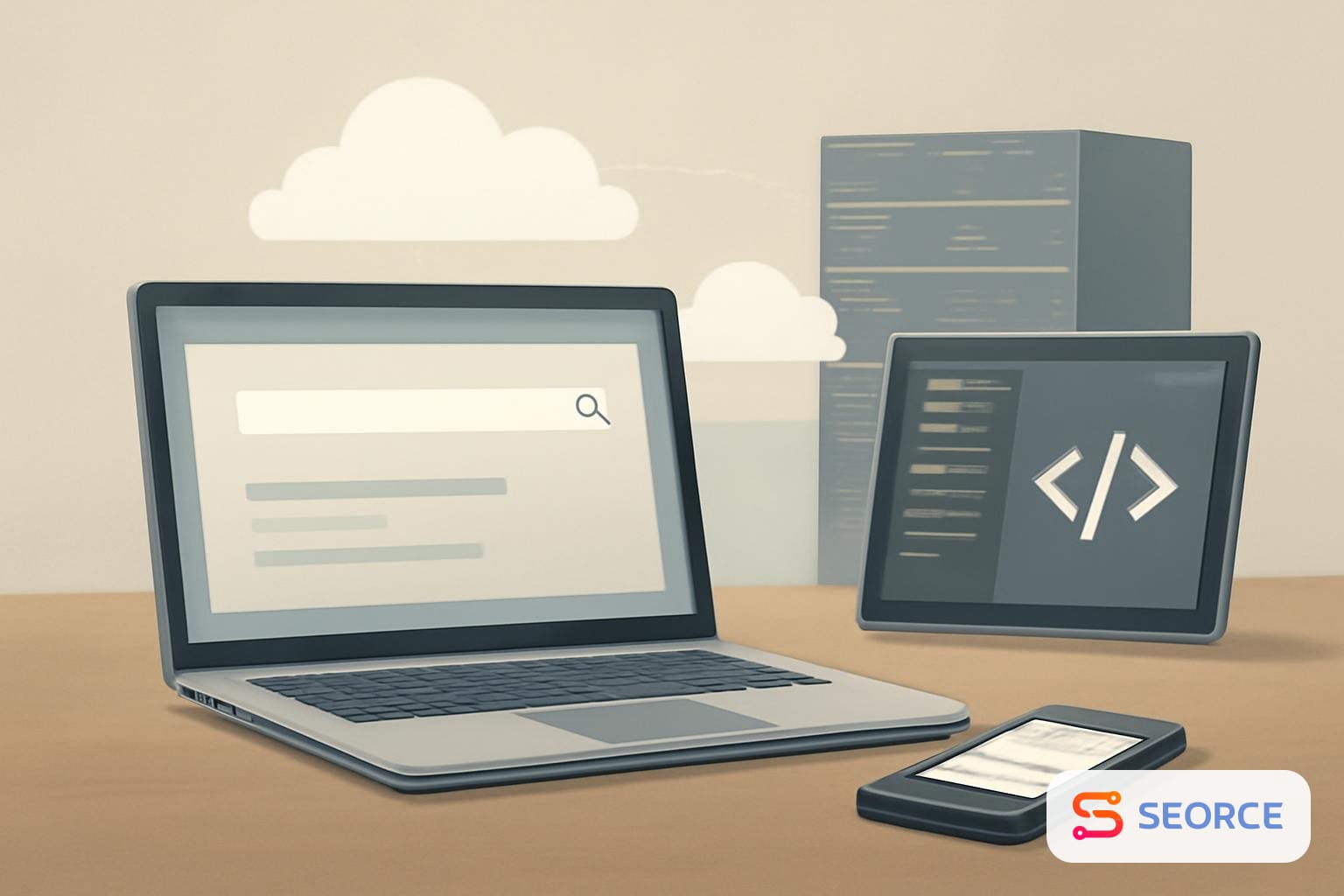
Laptop showing a search interface beside a smartphone and developer dashboard on a desk

Gemini 4 Argon availability changed on October 13, 2026, when Google opened its frontier model to paid Gemini API users, Google AI Ultra and Pro subscribers in the Gemini app, and AI Mode in Search. Google's own launch posts, the Google AI for Developers changelog, and Search Engine Journal all date the wider rollout to the same day.

Google changed access across several products at once, but the access is not uniform. Search Engine Journal reported that Robby Stein, VP of Product for Google Search, said Argon "is now rolling out globally in Search" and that subscribers can switch to it from the "+" icon in AI Mode, while Google's developer documentation says the API version is not available on the Free tier or on the Google AI Pro plan for the API.

How Gemini 4 Argon availability works

Gemini 4 Argon availability works by product and subscription, not by one universal account entitlement. Google's model announcement says developers and enterprises get Argon through the API in AI Studio and the Gemini platform, Google AI Ultra subscribers get it in Google Antigravity, and Google AI Ultra and Pro subscribers get it in the Gemini app and AI Mode in Search.

Product surfaceAccess Google announcedConstraint to check
Gemini API and Google AI StudioPaid tier access for developers and enterprisesNot on the Free tier or Google AI Pro API plan, according to Google AI for Developers
Gemini appGoogle AI Pro and Ultra subscribersConsumer subscription access, separate from API plan access
AI Mode in SearchGoogle AI Pro and Ultra subscribersSelectable through the "+" icon as rollout reaches accounts
Google AntigravityGoogle AI Ultra subscribersAvailable for agent-first development workflows
Android Studio and Firebase AI LogicPaid Gemini API tier, with Android Studio Canary and Antigravity paths also describedAndroid Developers Blog says rollout is global in supported regions

The pricing window also matters for teams budgeting API tests. Google AI for Developers says introductory API pricing runs through November 30, 2026, at $2 per 1 million input tokens and $10 per 1 million output tokens, then rises on December 1, 2026, to $4 per 1 million input tokens and $20 per 1 million output tokens.

Google AI Pro access to Gemini 4 Argon does not mean Google AI Pro API access. Google says Pro and Ultra subscribers can use Argon in the Gemini app and AI Mode, while Google AI for Developers says the Gemini API version is not available on the Free tier or on the Google AI Pro plan for the API.

What changed inside AI Mode

AI Mode changed by adding Argon as a selectable model for paid subscribers, not by replacing the default experience for free users. Search Engine Journal said nothing announced on October 13 changes the default for free-tier AI Mode users, and its own Pro account did not show Argon at 12:17 p.m. ET during the rollout.

The mechanism is the AI Mode model menu in the "Ask anything" bar. According to Search Engine Journal, Stein said Argon "brings big improvements to tackling nuanced, multi-step tasks in AI Mode" and is "better at understanding your intent and following your instructions in back and forth conversations." That explains the expected effect: users who select Argon should see differences most clearly on long, instruction-heavy searches rather than simple navigational or factual queries.

Argon in AI Mode is a paid, selectable Search model for complex sessions. It matters when the query has several steps, style constraints, follow-up instructions, or a need to preserve intent across turns. Google has not said that Argon changes the free AI Mode default or that it is available to every account immediately.

What developers can build with

Developers can build against the model ID gemini-4-argon in the paid Gemini API, with text output and inputs that include text, image, video, audio, and PDF files. Google AI for Developers lists a unified context window of 1,048,576 tokens and a default maximum output of 65,536 tokens, with long decode allowing output up to 1,048,576 tokens.

The capability list shows why Google is positioning Argon for agentic and enterprise work rather than short chat completion only. Google lists code execution, computer use in preview, file search, function calling, Google Maps grounding, search grounding, structured outputs, URL context, and thinking levels; it also says explicit caching, audio generation, image generation, and the Live API are not supported. Google's latest-model documentation says the default thinking level is medium, with low, medium, and high supported.

Android developers get more specific setup paths. The Android Developers Blog says Argon is rolling out globally to developers in supported regions, with access in Google Antigravity standalone and Android Studio Canary for Google AI Ultra subscribers, and in Android Studio, Google AI Studio, and Firebase AI Logic through the paid Gemini API tier. For local Android work, Google tells developers to download the latest Antigravity desktop app or CLI and install the Android CLI plugin with agy plugin install android-cli-plugin.

What search teams should do

Search and marketing teams should test Argon separately from default AI Mode because the paid model path can produce a different answer experience from the free Search experience. The practical check is simple: in AI Mode, open the "+" menu in the "Ask anything" bar, select Argon if it is present, and compare the same multi-step query against the default model that appears for the account.

The search impact is an inference from the access pattern and model capabilities, not a claim Google made about rankings. Argon supports search grounding and URL context in the API, and Google says the Gemini app now connects to more than 40 apps including Instacart, OpenTable, Adobe, and Shopify, so teams that depend on comparison queries, local tasks, product research, or software documentation should check whether Argon changes how their pages are summarized or used in task flows. Use controlled query sets, record the selected model, account type, date, and whether Search citations or URL references appear in the interface you are testing.

Content and analytics teams should also separate three products in their notes: Gemini app, AI Mode in Search, and Gemini API. A Pro subscriber seeing Argon in AI Mode does not prove an internal tool can call gemini-4-argon through the API, and an API test result does not prove the same output will appear in AI Mode. That distinction matters when teams report visibility changes to executives or clients.

What evidence is still thin

The evidence is thin on language support, rollout completion, and real user impact. Search Engine Journal said neither Stein's post nor Google's launch post stated a language for AI Mode Argon, and it noted that Google's support page for the AI Mode model menu still named only "Pro" and "Fast" options and described Pro as Gemini 3 Pro when checked on October 13.

The Reddit signal is also minimal. A post in r/singularity on October 13 linked to Google's Gemini 4 Argon release blog and had two comments, which shows awareness of the announcement but does not establish a pattern of practitioner outcomes. The next concrete trigger is pricing: teams testing the API have until November 30, 2026, before Google's documented Gemini 4 Argon introductory rates expire on December 1, 2026.

See more SEORCE in your Google results

Add us as a preferred source to see more of our stories in Google's Top Stories.

Add as a preferred source on Google

FAQ

Is Gemini 4 Argon available in AI Mode?

Yes, Gemini 4 Argon is rolling out in AI Mode for Google AI Pro and Ultra subscribers. Search Engine Journal reported that users can switch to it from the "+" icon in AI Mode's "Ask anything" bar, but the rollout may not appear in every eligible account immediately.

Can free users use Gemini 4 Argon?

Free access is not supported in the Gemini API, and Google did not announce Argon as a free AI Mode default. Google's documentation specifically excludes the API Free tier, while consumer access in the Gemini app and AI Mode is tied to Google AI Pro and Ultra subscriptions.

What is the Gemini 4 Argon model ID?

The Gemini API model ID is gemini-4-argon. Developers should use that ID when configuring API calls on the paid Gemini API tier, then verify input, output, and thinking settings against Google AI for Developers documentation before moving tests into production.

How much does Gemini 4 Argon cost?

Introductory API pricing is $2 per 1 million input tokens and $10 per 1 million output tokens through November 30, 2026. Google says pricing changes on December 1, 2026, to $4 per 1 million input tokens and $20 per 1 million output tokens.

Does Gemini 4 Argon change Google Search rankings?

Google has not said Gemini 4 Argon changes Google Search rankings. The documented Search change is model availability inside AI Mode for paid subscribers, so any ranking claim would go beyond the current evidence.

Entities

Gemini 4 ArgonGemini APIGemini AppAI ModeGoogle AI UltraGoogle AI ProGoogle AI Studio

Tags

Gemini 4 ArgonGoogle AI UltraGoogle AI ProGemini APIAI ModeAI StudioSearch RolloutDeveloper Access

Topics

SEOArtificial Intelligence

Sources

Gemini 4 Argon
Google AI for Developers
What's new in Gemini 4 Argon
Google AI for Developers
Release notes
Google AI for Developers
Bringing our latest frontier model to Android Developers
Android Developers Blog
Gemini 4 Argon is now available for developers.
Google Blog

More like this